skeptics vs. debunkers

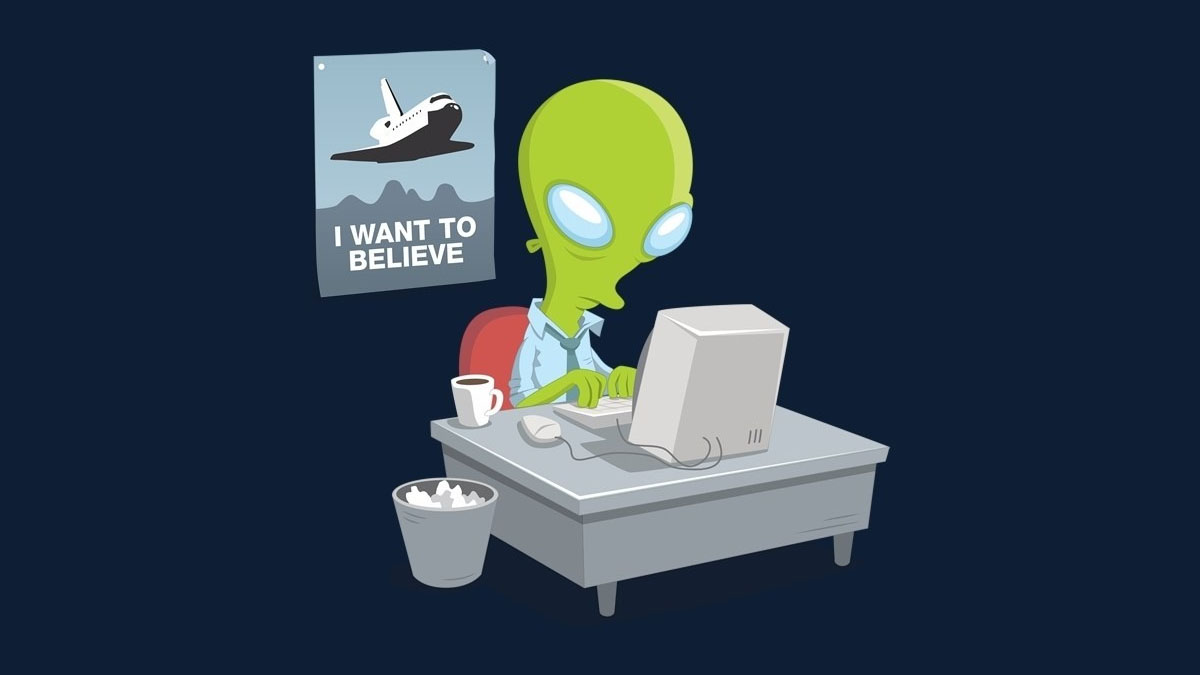
Over the past few years, skepticism and debunking seem to have merged. Every time anyone introduced as a skeptic appears on a popular science show or gets quoted in an article, you probably expect a dismissal of the idea in question promptly followed by a debunking. But skepticism and debunking are two very different things. Skeptics look at a problem with a critical eye, trying to parse what works from what doesn’t. Debunkers, on the other hand, are there to explain why the problem doesn’t exist, often calling themselves skeptics in the process.
Take a look at the presentation of Dr. Michael Shermer at the TED conference in which he talks about his non-profit group The Skeptics’ Society and performs an experiment I described in a previous post. (It’s 9:10 into the video.)
Note that he goes after things that aren’t all that difficult to disprove. Cheese sandwiches with a burn that looks like a face. Glowing smudges on windows. Playing music backwards. A dowsing rod for drug searches. Then, when he’s invited to appear in a documentary about alien life and theories about historical mysteries, he attacks them with the same attitude as goes after grilled cheese sandwiches with an image of Greta Garbo… err… I mean the Virgin Mary.
I’m certainly not saying that we should give every conspiracy theory and bizarre hypothesis the same diligence we put into investigating a genuine scientific idea. But not all seemingly weird or outlandish ideas are necessarily wrong by default. One of the biggest reasons why tales of lost cities like Atlantis, ghosts and flying saucers endure is because people would like to know there is something out there still waiting to be discovered. That sense of mystery and discovery lead us out of Africa hundreds of thousands of years ago. Stomping our myths and legends into a bloody pulp and discarding them as ridiculous superstitions without trying to learn the history behind them and if there’s anything to them, isn’t a victory for science and reason. It’s being a bully who’s trying to tear all the mystery and wonder from our world.
One of the reasons I like watching Mythbusters on the Discovery Channel is the uncertainty. Is a strange urban legend or kitchen table myth going to be busted, confirmed or at least possible? If I knew that every myth they tested would be busted, why even watch the show? If we know that every controversial theory is going to be gutted by the staff of debunkers who give themselves the skeptic designation, why even bother presenting it?