Skip to content

do we really need another apollo?

2009 July 31
by gfish

Now don’t get me wrong. I’m a huge fan of manned spaceflight and everything that it can do not just for our technological advances, but for our species as a whole. For decades, the space enthusiasts’ symbol of drive and achievement was the Apollo program. Even though the program was embraced for very earthly political reasons first and foremost, what it achieved was nothing short of spectacular. Using technology we would throw away as worthless junk today, humans reached another world and had their sights set on leaving the Earth-Moon system for bigger and bolder ventures. Awesome? All kinds of.

constellation poster

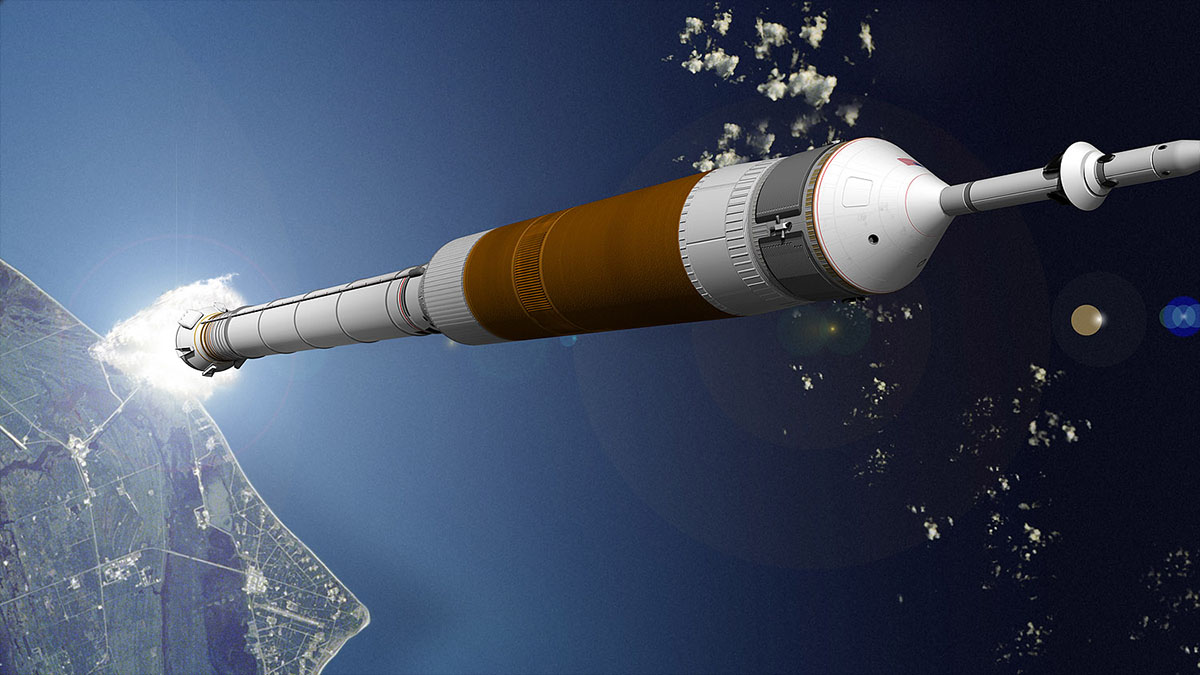
Now, NASA wants to do it all over again with the Constellation program. And not only do it again, but do it almost the same way. Maybe I’m out of line here, but why? It’s not that we don’t want to go back to the Moon as much as whether we want to take designs from the 1960s, modify them a bit, build a couple of rockets using today’s technology and pick up where Apollo 17 left off in the same exact way. What exactly do we learn by resetting the clock? We already know how to get to the Moon with a huge rocket and how to launch manned capsules into orbit and beyond. In that context, Constellation seems a lot like running in circles and giving today’s generation of NASA engineers a chance to relive the agency’s glory days.

I can see why it’s an appealing option for NASA to stick to what it knows best. For its needs, it’s a woefully underfunded agency with all due thanks to our pop culture and government neglect. Rather than having a global leader in aerospace R&D, the government decided that it wants a fleet of flag planting vehicles in space to make it look like the country is still dominating the final frontier instead. When you’re on a shoestring allowance, going out and really innovating is awfully risky and asking for a reallocation of the money already destined to go to campaign contributors and pet projects designed to get lawmakers through the next election, is a grueling process which has a very slim chance of ending in success. Hence, it’s tempting to simply update the extremely well engineered Apollo craft and see what happens when it’s in working order.

At the same time, what happens is that we’re taking an opportunity to innovate and revolutionize the way we get into orbit and turning it into a nostalgic redo of the past. The shuttle was a significant step towards reusable spacecraft and ultimately, single-stage-to-orbit vehicles. Instead of building on that to cut costs and improve safety, NASA is actually rewinding the clock and going back to the capsule concept of the 1960s and 1970s, a concept that was supposed to be replaced by reusable orbiters which were a reliable workhorse for orbital construction, satellite launch and maintenance. Or rather, our current method of getting into space.

Getting back to the lunar surface is a great idea. It really is. But we also need to advance the spacecraft and propulsion systems of tomorrow while we do it. Otherwise, we’ll spend the next few decades hitting the rewind button for the sake of cautiously meeting small, resentfully doled out budgets.


  • Share/Bookmark
4 Comments leave one →
  1. oregonmjw permalink
    July 31, 2009

    When President John F. Kennedy announced on May 25, 1961 his intention, that the United States should place “a man” on the surface of the moon before the “end of the decade” it was a clarion call for Americans to lift their eyes to the heavens, all the better to avoid seeing some of the less than happy sights here on the ground.

    It was a heady time. We had a handsome young rock star living in the White House with his beautiful family; the Cold War was at its height; Soviet Yuri Gagarin became the 1st human to orbit the earth, and we fell behind our enemy’s achievement level. Sheppard, Grissom and, in 1962, John Glenn caught us up, but we needed something really big. We all needed it; and the most prudent political thing one can do is what the people want – after you tell them what that is.

    There is a difference between reinventing the wheel, and simply repurposing or reimagining a successful program. The Apollo Program was a nearly unqualified success. Six successful landings on the Moon, beginning in 1969, just as Kennedy had promised, until the project was scrapped after Apollo 17 in December 1972. A repeat or two about now would be a nice morale booster. God knows we could use one. Sort of like fixing up that super cherry 1967 Chevy Camero – the design was perfection, just the carburetor needs a boost; maybe a new paint job.

    The question now is not “should we” go back to the Moon; it’s how quickly can we get there! And, for as little money as reasonably possible; in as flashy a manner as that money will buy. Get the populace used to the idea of planetary travel again. A little feel good politics is in order. Apple pie and Astronauts! Take Miles O’Brien along this time – Tweets & True/Slant from space!

    True interplanetary space travel can’t practically be undertaken by one country – certainly not this one. It’s all about the money. But America can put its own stamp on the Moon without help. That’s an important political goal. And, it’s politics that pays the bills for any other manned exploration which may seem desirable down the road. Hard science and the advance of it into space by American means costs money. The circus first; then the bread

  2. Paul Smalera permalink
    July 31, 2009

    What’s really unfortunate is NASA and its overseers are playing politics with the Constellation program. A bunch of leading engineers there proposed a system named “DIRECT” that maximizes reuse of space shuttle technology (the safe stuff) and would be dramatically cheaper than Ares. But this isn’t about cheap; it’s about contracts and Congressional districts. It’d be one thing if returning to the moon was a small part of a larger program, as it should be the second time around. But it’s not.

    Despite lip service about preparing for Mars, there’s little that will be gained from Constellation that, as you point out, we don’t already know. When the decision is made to go to Mars, it will be as massive and technologically advanced an undertaking as Apollo was for its time, which peaked at 6% of the GDP in spending. In the meantime, there’s no reason, if we are to return to the moon, we shouldn’t do it with tech we already have.

    Read more about DIRECT here:

    http://www.parabolicarc.com/2009/05/18/direct-team-disputes-nasa-analysis-ares-alternative/

  3. July 31, 2009

    I’d be far more psyched if they just built/sent robots for a small fraction of the costs and risks. It’s a few seconds roundtrip at the speed of light, but robots are patient.
    We’ve advanced robotics quite a bit in the past 40 years since the last round of landers hit the moon. Whatever we haven’t advanced, we can certainly catch up on. That would do a bit of good on Earth.

  4. July 31, 2009

    Paul, I made it a point to write about the DIRECT concept when the first major reports of problems with the Ares rocket surfaced. It’s actually a lot like NASA’s official Plan B which is probably more than just a coincidence.

    And you’re absolutely right on the political front. Right now there’s a lot of pressure in favor of keeping Constellation in development. The lawmakers behind it couldn’t care less about space travel, but they’re more than happy to make sure that glamorous, extremely well compensated positions flow into their territory.

Leave a Comment

Note: You can use basic XHTML in your comments. Your email address will never be published.

Subscribe to this comment feed via RSS