nasa in 2011: the good, the bad and the ugly

So it seems that the Constellation program is finally dead in the water, a conclusion that’s not surprising to all the bloggers and reporters watching its development. At best, it was a chance to relive the Apollo glory days, and at worst, it was a big step back for NASA. Intended to put humans back on the Moon by 2020, it was given so little cash that a lunar orbit by 2030 would’ve been a major achievement. Even worse, it was slowing down the technological development of safer, more reliable and more efficient space travel by going back to what was state of the art in the 1970s and abandoning all research into single stage launch vehicles. But the new budget for the agency looks to fix these problems and forge alliances with space tourism startups who would dearly love to start sending humans into deep space on brand new launch vehicles as soon as they can.

And that’s one of the good things about NASA’s new budget proposal. Rather than flag planting, the focus now is to create a new generation of space infrastructure, bolster robotic exploration to pave the ground for human travel, and come up with new ways of launching astronauts in space with the help of big dreamers who don’t just want to make money by launching people into space, but are driven by the kind of spirit of exploration that was beaten out of NASA by narrow-minded bureaucrats and budget cuts from politicians who lack any and all vision beyond their campaign funding strategies. Space travel isn’t being privatized of course, not yet, but the closer cooperation between the government and aggressive aerospace startups could be a catalyst for all kinds of new inventions. Yes, no privately built launch vehicle other than the prototypes for Virgin Galactic have been tested to launch humans safely into space and no company other than major defense contractors built a vehicle able to launch them into orbit. However, with an imperative to do just that and billions waiting for those who make it happen, expect space tourism startups to attack the drawing boards with renewed vigor.
But of course there is a catch here. The size of the actual budget itself is still quite paltry considering what has to be done, just a few billion dollars per year to crucial areas like propulsion R&D and robotic missions. That’s more than is being invested now, but still too little to discourage penny pinching and the kind of risk taking that could really produce spectacular results. And since about half of Americans already think we spend way too much on space travel as it is, there’s a risk of these funds being capped should the economy recover slower than expected by optimistic estimates. True, channeling about $6 billion to projects that create R&D, technical and engineering jobs is hardly going to impact a $15 trillion economy, but in tough times whenever the news announces that government money isn’t being spent on them, they get mad. And even though NASA says that it will be taking baby steps towards a more promising and fruitful course, we should keep in mind that all this should’ve happened decades ago and it will take a very long time to see America return to orbit after the end of the shuttle program. Unless the government suddenly decides to starve its space program again of course. Then those routine trips to space will be just something we tell our kids about at bed time…

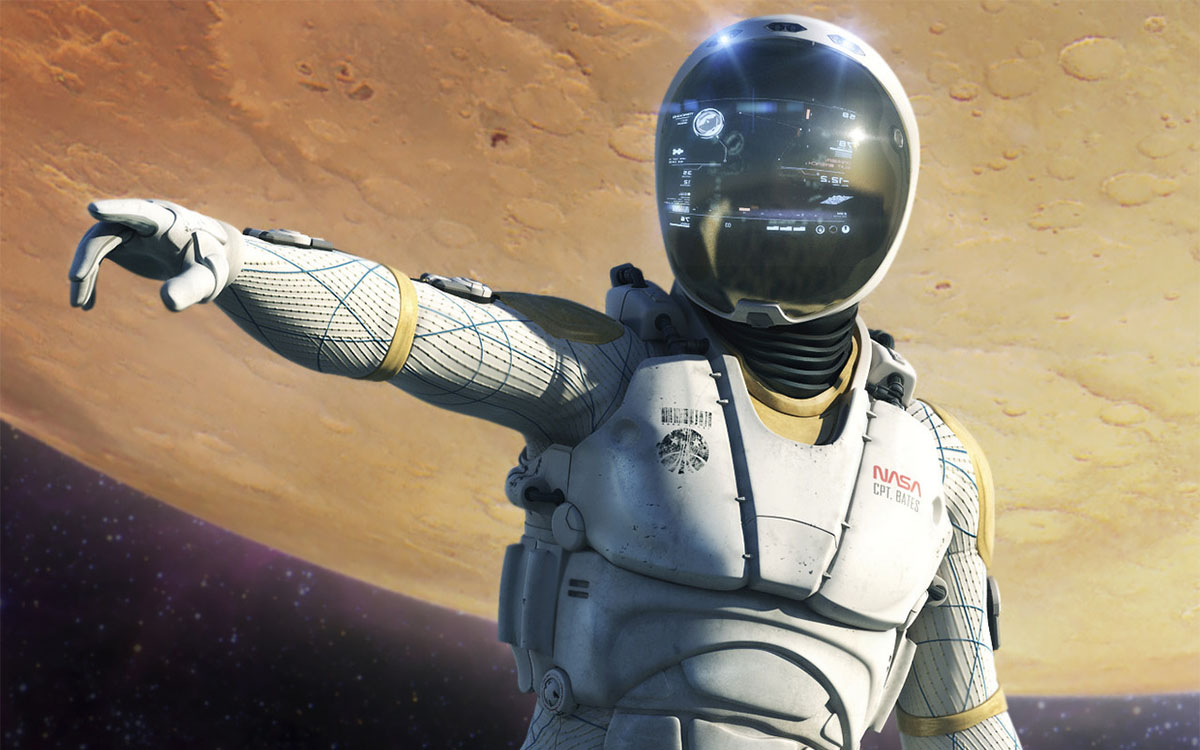
[ illustration by Chris MacDonald ]


… but in tough times whenever the news announces that government money isn’t being spent on them, they get mad.
A referent for those last two pronouns would help.
Guessing that you’re talking about “the public”, I beg to differ. Consider just how much they’re willing to throw at what’s called “national defense”, and how much objection there is to programs for the (general, visible, comprehensible) public good, such as health, education, etc, the question of what does and doesn’t anger “them” seems extraordinarily complex.
It will take a Sputnik Revisited event to get us back on the catch-up track. The Russians or the Chinese will pull off something that will make us realize we are falling behind. Or, we will find out that there is a large piece of rock heading our way, and we can’t do anything about it. Do we have to be this stupid?
I know this is an old article but this type of hodge podge. I really don’t get all this ‘NASA is falling behind in space exploration’ doomsday BS, are people ignorant to reality?
Yes Russia and China are advancing quite rapidly in MANNED space flight and soon they will come to the same challenges NASA arrived at decades ago in regards to long distance manned space flight which is the reason they adapted to unmanned missions so they could learn enough about the physics involved in space to make SAFE manned space flight over large distances possible.
Various forms of radiation, anomalous accelerations and decelerations of space craft, the uncertainty of gravity based orbital models that have failed to show the underlying reality of the orbits of the cosmic bodies in our system, unmapped objects such as meteorites and comets, the electrically charged particles of the “solar wind” released by the sun with potentially damaging effects to electronic equipment – just to name a few of the hazards in space that we currently do not have sufficient understanding of let alone sufficient protection from to make manned space flight anywhere close to being safe.
I honestly don’t think Russia or China care so much about the safety of their people so it’s entirely possible they will forge ahead into the extremely dangerous realm of deep space manned missions without knowing fully what to expect but there is a high likelihood their attempts will prove ill-fated.
NASA may be falling behind in near-Earth manned space flight but in general space exploration no other national or international space agency body comes close to matching NASA’s past achievements and current and future missions(though I feel some are misguided), with the possible exception of the ESA.
One of the biggest arguments I hear about NASA ‘slowing down’ on space exploration is the noticed decline in the number of major space launches over the past few decades as compared to the dawn of the Space Age in the 60′s and 70′s. Trying to explain to common folk that today’s space probes and satellites and other exploratory tools used by NASA are so much more advanced and that a single probe can do what 20 probes in the 60′s and 70′s did and as such the past 2 decades have produced far greater findings than in previous decades is like talking to a brick wall.
Space exploration is advancing rapidly these days thanks to unmanned space flight and I agree with the current Obama administration that unmanned space flight is the way to go as our presence in space should be about exploration, not domination. Exploration by manned missions is far slower and less efficient and dangerous and the only reason to pursue it over unmanned or ‘robotic’ missions is to “stake a claim” to space and “claim your territory”.
As we are discovering more and more with each passing day and each passing discovery we do not know anywhere near enough about the cosmos to be trying to dominate it in any way. It is smarter to try to understand the nature of the cosmos before trying to “conquer” it with manned missions than it is to jump in head first without knowing what we are up against.
With that all being said I actually I have no love for the consensus based science undertaken by NASA, but I can’t deny reality and I don’t like people who don’t understand the subject of space exploration misunderstanding NASA’s approach to it as being lacking in substance when it’s actually providing a wealth of information that in time will help make manned exploration safe and easy.
Robotics in warfare are used the same way, it’s stupid to send people to do extremely dangerous things when a robot could do it just as easily(or often times better) with no risk to a human being at any point in time. If a robot gets damaged or destroyed you build a new one, you don’t just build a new human astronaut if one gets killed – not if you have any kind of moral fiber anyways.