can global warming really stop an ice age?

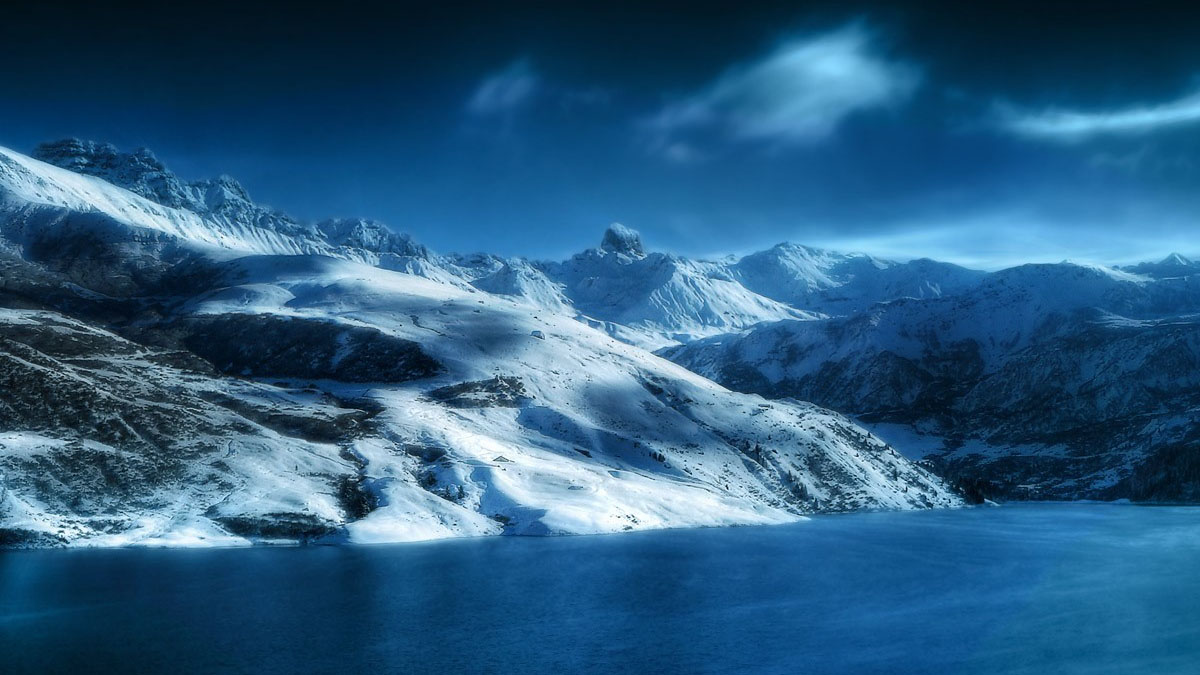
For a while, there’s been talk of the current warming trend displacing the start of a scheduled ice age while an alternative hypothesis of it actually triggering one by desalinating the polar oceans fizzled. Now, according to a series of media reports about a recent paper, there’s some solid data to back the idea. It’s long been known that we’re living through a more or less typical period between ice ages and the expectation was that the fairly warm and gentle climate we all know and love should be coming to an end over the next thousand years, or if we go by geologic time scales, any second now. During a previous period in the Earth’s history when we were in the same orbital position, the planet started to cool as new ice ages began. Today, however, the trend isn’t cooling but just the reverse. So clearly, we’re pushing back the ice age, right? Well, not so fast. We may or we might not because this conclusion implies that our greenhouse gas emissions will remain the same as they are today, without being sequestered by oceans, and are based on a sample of just one historical analog.
Now, granted, our greenhouse gas emissions are nothing to take lightly. Despite what denialists will tell you, our factories and vehicles dwarf all volcanic activity on the planet in any given year, even with major, major eruptions counted in the tally. Every three days or so, we will belch out more carbon dioxide than all the active volcanoes on Earth put together and the only two geologic events which could even compete with our ability to pump greenhouse gases into the atmosphere would be Yellowstone going supervolcano, or a reopening of the Siberian Traps, which came eerily close to strangling all macroscopic life on the planet in the Permian. If you’re impressed, don’t be. Both humans and volcanoes are only a small part of the carbon dioxide cycle. But their emissions can affect the atmospheric balance by boosting the amounts of the gas just beyond the point where it can be effectively sequestered by the oceans and the biosphere, and affecting climates. Since we’re about a hundred times more productive in greenhouse emissions than today’s volcanoes, our surplus slowly but surely edges the thermostat upwards. The big question is to what extent. Sure, it seems very plausible to see our emissions create a warmer world with more droughts, but can we cancel out an ice age?
Cycles of ice ages, as you may recall, depend on wobbles in Earth’s orbit as we go around the Sun and when we’re in the right position, glaciers begin to grow as there is less sunlight, and therefore heat to melt them. To counter that would take an awful lot of carbon dioxide, maybe even too much for us to comfortably live on this planet anymore. Considering that even if we weren’t warming our world, the transition would take a thousand years, it’s also hard to justify projecting 150 years of increasing industrialization into the relevant time scales, especially since most of our carbon dioxide emissions come from burning fossil fuels and we will eventually run out of those. Even with the most generous stretch and the most conservative possible view of energy use across the globe, one could imagine another 400 to 500 years of carbon-driven industry. Then what? What do we burn for energy? More than likely, we’d have to switch to other methods of energy generation that will allow us to cut down on fossil fuel use, especially that of oil which we need for plastics and gasoline, which will just have to cut down on the emissions we would produce. And who knows? Maybe we will have another scientific renaissance in the next century and crack fusion to generate cheap, emission-free energy. Forecasting for an ongoing, steady stream of carbon dioxide for a thousand years just isn’t going to work.
Even if we ignore the question of emissions, there’s the question of comparing contemporary Earth with what it was like approximately 780,000 years ago. True, it was in pretty much the same astronomical position, and true, it had a very similar set of variations in sunlight which forecast an ice age. But what about the atmosphere? Could we really say that it all boils down to carbon dioxide and decide that because 780,000 years ago we had less of it and an ice age began after about a thousand years of averaged cooling, this means that our greater amounts of carbon dioxide and warming temperatures mean the ice age is either off or postponed? Not without having several other data points by which to judge. If we had five pre-ice age eras matching ours almost perfectly with the exception of carbon dioxide concentrations and in all of them we saw a pronounced cooling instead of the warming we see today, maybe there would be something to it. However, we don’t, and that makes it difficult to support the proposed conclusion. Until there’s more data, I would bet on the next ice age arriving on schedule and that whatever we do today, may well be gone from the atmosphere by then. Though the effects of carbon dioxide pollution on us before that time are very likely to have other serious consequences for us…