how a russian media mogul pulled a kurzweil

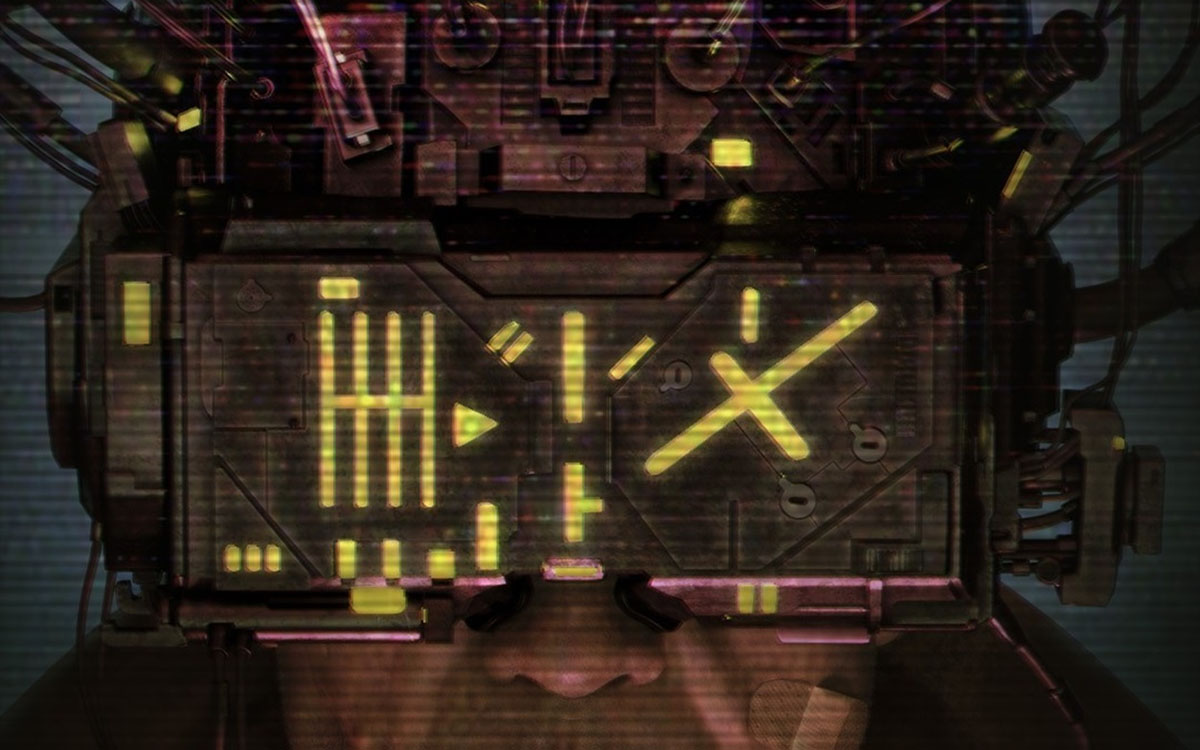
Roughly a week ago, while I was doing some traveling, someone with a PR group which seems to work for a number of Kurzweil’s Singularity University projects, sent me an e-mail about a Russian tycoon named Dmitry Itskov and his plan to take a DARPA concept to transhumanist extremes that would make Kurzweil proud. Just imagine being kept alive by custom machine bits tacked on as your organs fail with age until you can be uploaded to a supercomputer and live eternity as a digital entity. Basically, it’s Ghost In The Shell amped up and sold as a practical venture and while parts of it are more than plausible and are already in the works, the ultimate goal of this project seems to be completely unworkable unless almost everything we know about the brain so far turns out to be wrong. But since I’m supposed to be objective, I asked if I could take a brief look at some of Itskov’s notes to see how serious he is about this project and whether he’s getting good advice, and being fluent in Russian, inquired if they would be willing to send them to me in their original language. So far, there hasn’t been a response, but the story has been spreading across the web needs to be addressed.
Now we’ve talked about being able to swap out failing organs for synthetic substitutes before, and that it may be easier than a completely biological solution to boot. Obviously, nothing has changed there and it’s more than likely that in the next 25 to 30 years, humans will routinely become cyborgs endowed with critical artificial organs and limbs that interface with the nervous system. Rather than simply age and wear out, we would just swap what’s no longer working for something that will keep us going long into the future. To that extent, we’re testing all sorts of machine-brain interfaces, from mind-controlled computers to artificial arms able to send feedback to the body, to machines that can turn our intent to say something into actual words, and we will keep refining them until we start hitting the limits of the human body to be merged with machines. And even then we could go beyond it provided we have the technology to replace bone and muscle tissue with metals, and electro-sensitive polymers in vitro, sort of like in a science fiction scenario I mentioned once before. So all those parts of Itskov’s project seem quite sound and have newly emerging volumes of sound research as proofs of concepts for many seemingly radical ideas. However, when he starts rehashing Kurzweil’s dreams of digital transcendence, he goes completely off the rails and deep into the realm of wishful thinking.
Uploading human minds into a machine interface just doesn’t work in biology because your mind isn’t just a big hard drive you can swap in and out. If we really had to stretch for a computer analogy, your mind would be more like RAM or a RAM disk, storing everything you need to use in a constantly active state. Power down the computer and the contents of the RAM are lost. In a machine, we could simply write the contents to a store so when the computer is turned back on, we could simply inject the required data back into memory. But human bodies are a lot more complex and finicky than that. The information in our brain is a composite of not just an extremely plastic and constantly changing set of neuron connections, it’s also the constant hum of our brains while we’re alive. If you were to try and map its topology, you would find an ever-shifting web of chemicals and signals churning at different frequencies at different times and with different results, and no two minds would be exactly alike. Furthermore, we know that if this dynamic topology is disrupted enough by a blow to the head or a massive stroke, a completely different person can emerge. You’re a combination of everything your mind does and did and uploading this kind of complex continuum pretty much requires a soul or something rather similar to it to contain and abstract your mind from your body. And it’s doubtful such a thing really exists. It just seems far, far too convenient for nature to oblige us with such a simple solution to all our mortal woes…