the pursuit of intelligence in computer science

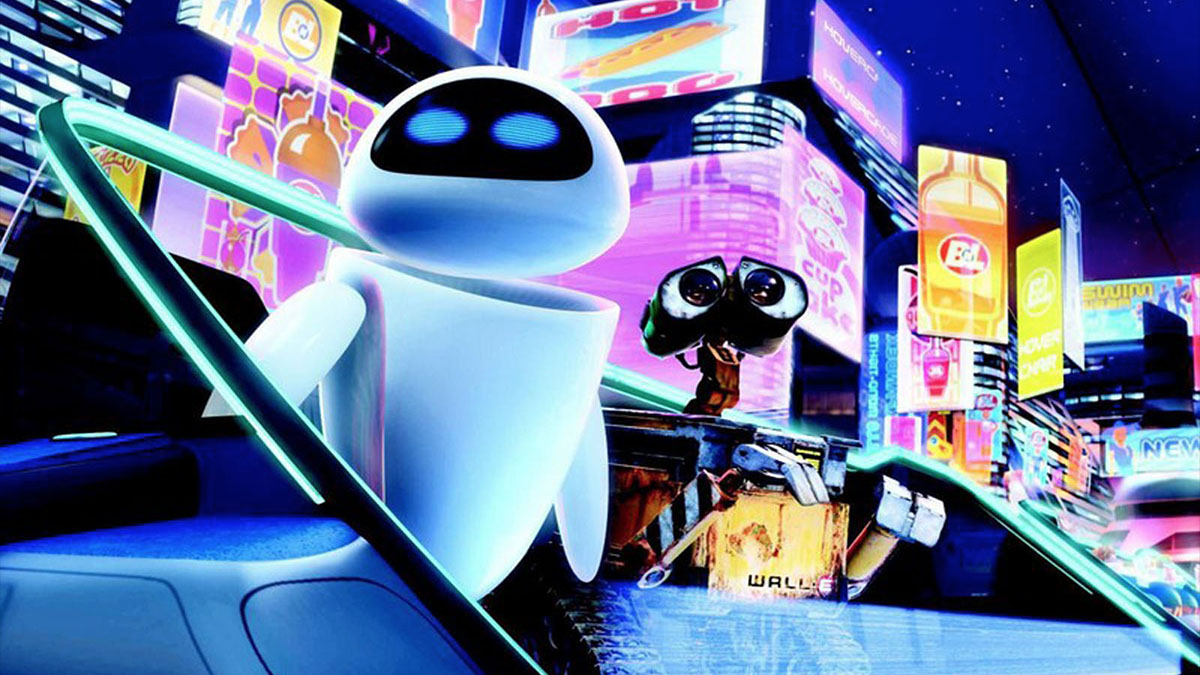
Since the dawn of high tech electronics and robotics, we’ve heard an awful lot about artificial intelligence and countless tales about how it may just decide to enslave us all one of these days, or fuse with humanity into an unrecognizable homunculus of men, women, children and machines as in the end of Isaac Asimov’s classic short story The Last Question, which is probably my favorite science fiction tale for it’s amazing scope and it’s bizarre climax. But when we actually drill down to the actual requirements for making machines endowed with the kind of computing abilities we’d call intelligence, we’ll find that the definition of what actually constitutes an objective pattern of cognition we will recognize as intelligent is extremely vague and constantly being rewritten.
An easy way to try and establish whether a computer program is intelligent or not would be to give it one of the many IQ tests we constantly use on ourselves. Surely if it can score a 120 or 140, it would have to qualify as a machine capable of advanced cognition, right? Actually, no. Not even close. Just like you can increase a score on most of the IQ tests in existence by taking them multiple times and training your mind to look for the logical patterns on which the questions are built, a programmer can simply create enough methods for the software to make its way through questions ordinarily designed for humans, with ease.
On top of that, the results won’t mean much since the tests aren’t well equipped to measure critical thinking skills and many people whose scores should put them firmly into MENSA territory can have the intellectual depth of an empty saucer and the curiosity of your average dining room table. So to design a truly intelligent machine, you need to program what we would know as insight, creativity and curiosity. That’s much harder than the propositional logic of working memory and stopping logical patterns. Not that the latter should be seen as a picnic either…
But that shouldn’t be an impossible hurdle, say some AI enthusiasts. If we modeled the brain with a powerful supercomputer we’d track down how the creative process works in the human mind. Then, you could use this knowledge to build a creative machine, right? If only it were that easy, MIT and CalTech would’ve been making thinking computers by now. Our minds are constantly lit up with activity as we process the barrages of stimuli coming through our senses.
And while some parts of our brain are devoted to certain very specific tasks, the actual cognition taking place using the information they collect, or using them to carry out our planned actions, is still kind of a black box. Looking for a creativity cortex might be a fool’s errand and the mechanics of things like artistic talent or aptitude for innovation are really the products of very intricate cognitive processes that are very difficult to accurately pin down in mechanical terms.
This means that while we understand how to give our computers some sense of logic and a very basic grasp on abstract thinking, we wouldn’t really be giving them intelligence until we can figure out what roles creativity, inspiration and curiosity should play in how we talk about intellect. Consider someone like Leonardo DaVinci, a man who’s widely considered to be one of the most brilliant people in history. Sure, he had a terrific grip on logic and scientific fact, but his incredible artistic skills, curiosity in how the human body was put together, and profound creativity when it came to engineering, were just as important at making him a celebrated polymath and one of the symbols of the West’s scientific and cultural accomplishments (fueled in no small part by the knowledge acquired from scholarly Muslim cultures during the Crusades, but that’s another story).
Obviously, it would be absurd to challenge computer scientists to cough up a digital DaVinci, but until we come up with a concrete definition of what a well rounded intellect entails, how we define intelligence would be akin to one of the most famous definitions of pornography given by U.S. Supreme Court Justice Potter Stewart. We’ll know it when we see it.
As a side note, I should mention another little note on creativity. Sometimes, when robots are given very basic rules and a lot of room to find their own solutions to certain problems, they come up with answers we could consider somewhat creative under the circumstances. And that makes me wonder if creativity is really what happens when we’re not constrained by rules in how we find a solution and arrive at an approach that seems effective and novel in our situation. In that case, we should be programming machines with fewer rules and giving them some free reign in making decisions, something which classically trained programmers working on business and mass market applications might find antithetical and potentially futile.