Skip to content

keep on waiting for that alien invasion…

2011 March 15

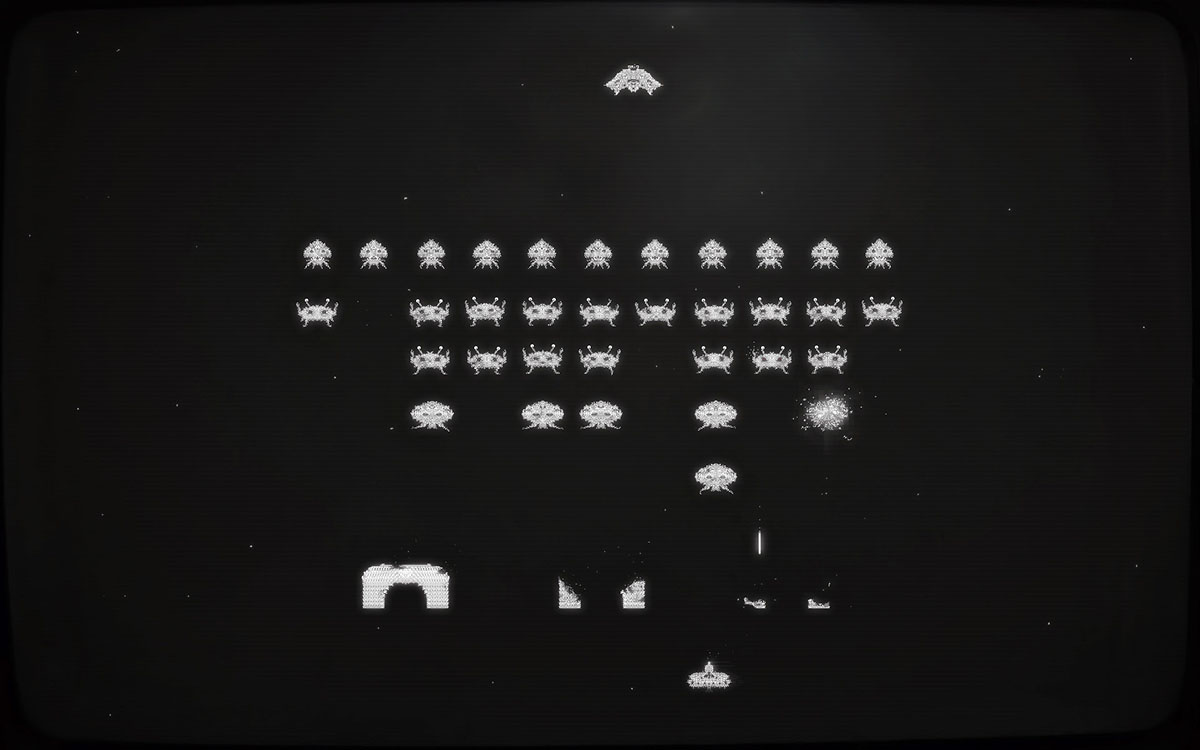
Ever since the science fiction genre was born, we’ve had a seemingly endless stream of tales about an alien armada descending on hapless humans for almost every reason imaginable, from the desire for resources, to making a new home for themselves. And outside the typical alien invasion movie, cult classics have shown extraterrestrial zealots on a quest to spread their religion by force or act as the galaxy’s eugenicists in charge, seeking to purify the cosmos of unclean organisms whose technology or biological prowess is inferior when compared to theirs. Ideas of alien invading Earth have also been given a veneer of scientific viability thanks to the pronouncements of Stephen Hawking , who warned us to keep quiet as not to attract attention from old and powerful alien warlords on a quest to keep their species going. But the question that I, and Dr. O’Neill at Discover Space, have is how likely is it that one day we’ll wake up with an alien battle fleet settling into orbit or barreling through the atmosphere to start exterminating us? It may happen, but it’s far more likely that it won’t.

Any scenario which involves two intelligent alien species fighting with each other requires that those species live during the same time and at least one of them developed the means to manufacture big enough armies, spacecraft fleets, and weapons to survive a long journey through the vacuum of space and pack enough of a punch to dismantle another species’ defenses. That’s already a massive hurdle to clear since both of these species would need to evolve in an environment where intelligence is a beneficial enough trait to keep in the gene pool, and at least one of them would have to develop the desire to travel into space and have the means and the limbs to build the vehicles to do so, and continue on, making the decision that they have to be able to make warships to defend themselves as they explore space. And mind you, all this has to happen without an immense natural disaster triggering an extinction or setting the more developed species back so they have to start from almost scratch. Actually, the most likely scenario for a well armed alien horde is a species which is politically divided and built an armada to defend its different factions’ interests on other, nearby worlds.

That brings us to the next issue. If aliens have run out of resources on their own planet, something that we’re well aware can happen because we’re plundering our own world’s raw materials at often alarming rates, they don’t have to mount an expedition to another solar system and face other intelligent species they know little to nothing about. Asteroid belts and clouds of would-be comets surrounding their parent stars would be filled to bursting will all the resources they would need for millions of years, simply by their volume alone. Our starving aliens would only have each other as competition in grabbing them, and the chances that they’re survive for a few million years without some sort of major calamity putting a damper on their expansion are rather slim. An occasional comet or asteroid are bound to hit an outpost or their home world, and even if they have the ability to destroy or deflect them, something else could eventually get to them. To exist for millions of years without a plague or a natural calamity at least slowing them down, these aliens would have to be either omnipotent, or just amazingly lucky. But the odds still are that at least in its stellar neighborhood, there’s no intelligent life as they would know it and all the aliens they’ll ever encounter would be feral animals or microorganisms.

What does that mean for us? Well, even if there was a highly advanced and intelligent alien species out there and it was starved of resources after tens of millions of years of existence in one form or another, we wouldn’t be a likely destination for invasion. We’d probably be too far away and too expensive to attack for a pretty minor payoff. Everything aliens could find on our planet could be found in greater abundance and higher densities in asteroid belts and comet-rich clouds left over from solar system formation. In a scenario like the on we saw in Avatar, an incredibly rare and necessary mineral was found on an alien moon just over four light years away, a proposition that would place it well within a future human society’s grasp and encourage us to conquer alien species to satisfy out economic needs. However, the likelihood of such a perfect collision of destinations and resources is very, very low, especially if we consider the relative homogeneity of planets in our galaxy. Though if the aliens are interested in new resources but are instead driven by their desire to be interstellar bringers of a religious doctrine at all costs, we can pretty much just toss the practical considerations out and assume the worst case scenario. Good thing they’ll probably have to cross thousands of light years to get here and we will have ample time to prepare for armed extraterrestrial threats. Provided we even try to prepare, of course…


Share
8 Comments leave one →
  1. Paul permalink
    March 16, 2011

    Two scenarios: one is that basic Earth-likes are genuinely rare, and removing 7 billion native technology users turns out to be easier than terraforming planets like Mars.

    The other is either pure xenophobic hatred, or hard-learnt lessons of precaution that sentient species that reach the stage we’re at are, say, a millennia away from being a serious threat to them (a blink of an eye for an old species.) We are being removed by scouts ahead of the main colonisation front. If they don’t kill us off, we may have already colonised (and “used up”) this part of the galaxy by the time the main wave gets here. (And the reason they invade, rather than stand-off and nuke us back to the stone age is the same as scenario one. Good planets are too rare to waste.)

    Invasion scenarios are like the Fermi Paradox, there are too many possible solutions. It’s sad that Hollywood doesn’t even try. “Ummm, they want our water? Yeah that’s it!” Idiots.

    Re: Asteroid mining aliens.

    Stephen Baxter’s Manifold: Space has this as its starting point. Essentially, aliens reach our solar system and start exploiting the resources without much interest or regard for the natives of the third planet. Actually a more interesting and realistic threat than the average Hollywood blockbuster, but better suited to the novel than an action movie.

  2. Greg Fish permalink*
    March 16, 2011

    “Earth like [ planets ] are genuinely rare, and removing 7 billion native technology users turns out to be easier than terraforming planets like Mars.”

    But this would imply that the aliens evolved on a world almost identical to ours, or one similar enough to find our planet comfortable, ran through their resources, and are so close to us that they can even think of mounting a massive colonization effort. Oh and a little catch to keep in mind: it would be immensely resource-intensive and expensive to build a space-faring armada, so a species with few resources left could ill afford one.

    “If they don’t kill us off, we may have already colonised (and ‘used up’) this part of the galaxy by the time the main wave gets here.”

    I don’t think so. Galaxies are very, very big and it’s highly unlikely that we could colonize and deplete even half of a percent of one, and that’s with warp drives. There’s no way a species like ours could be even ten or twenty thousand years away from expanding far enough to pose a threat to a much older species. And again, to even notice that we are here and we’re intelligent, this alien species would need to be very close and have the kind of alien detecting technology that would make SETI’s directors green with envy…

  3. Bruce Coulson permalink
    March 16, 2011

    But you’re forgetting the classic motive; that the aliens want our women!

    Hollywood is about images and emotions. Much of written science fiction is about ideas and concepts. It’s possible to make good science fiction movies, but it takes far more work, writing-wise, than a special effects blockbuster with a clearly identified menace.

    In order to make a credible invasion, you’d need to have something on Earth that wasn’t available elsewhere. Living space (if Earth-like planets are uncommon, for instance). It’s much easier to remove a primitive species than to re-make real estate. Or living beings; Colin Wilson’s “The Space Vampires” postulated a race that fed off energy emitted by living creatures. (“To Serve Man” covered the same idea, albeit less seriously.) A 50s movie “The Monolith Menace” (I think?) had growing crystals that absorbed anything they touched, grew to a huge size, then fell over, shattering and creating little crystals which then grew, etc. It was an alien ‘invasion’; but much closer to the idea of invasive species wrecking havoc.

  4. badbass9 permalink
    March 16, 2011

    Go Bruce! Everybody wants our women. I about fell out of my seat when I read the first line of his comment. But his crystal idea, or the movie’s actually, is the most plausable. Much like the Asian mussel takeover of the Great Lakes ecosystem. Or kudzo.

  5. Paul permalink
    March 17, 2011

    Greg,
    “But this would imply that the aliens evolved on a world almost identical to ours, or one similar enough to find our planet comfortable,”

    Oxygen atmosphere. We’ve commented on this before, there’s not many alternatives for a life-bearing planet. Humans can adapt to about half atmospheric pressure, I don’t know what the upper limit is.
    Gravity…? (I doubt gravity gets much higher without becoming a neptunian-type rocky-core gas-giant, or much lighter without losing the atmosphere.)
    Liquid water. That sets your temperature range. Judging from humans, we can adapt to anywhere with water.
    Existing biosphere: If panspermia is true, basic DNA/chorality will be the same, so native life is a terraforming (or xenoforming) short-cut. If not, who the hell knows.

    I suspect that any planet capable of raising intelligent life will be on a narrow spectrum. So any two would be pretty similar. I feel like atmospheric pressure/O2 levels are our most sensitive variables.

    “ran through their resources,”

    Not necessarily, if they are expansionist. Europe wasn’t depleted before it funded the colonisation of the Americas. Africa wasn’t a moon-scape before humans (and proto-humans) first expanded.

    (The whole Fermi Paradox was based on the calculation that even with 1000yrs between each round of colonisations, it could take just a few million years to colonise the whole galaxy. Thanks to the magic of exponential growth.)

    “it would be immensely resource-intensive and expensive to build a space-faring armada, so a species with few resources left could ill afford one.”

    This is why I doubt it’s can ever be a strictly resource issue. By the time your species is running out of resources enough to risk everything on a war against another star system, you are way too far down the other side of the curve to be able to afford it. Only a species at the peak rate of growth, and peak arrogance, would spare the resources on such a venture.

    It’s one of the things that worries me about peak oil (and peak uranium, etc, 50 years later), if we reach the end of cheap energy before we’ve got the technology (or will) to expand into the solar system, I’m not sure we ever will. (Barring some magic technology breakthrough, of course.)

    “we may [use up] this part of the galaxy by the time [their] main wave gets here.”
    “Galaxies are very, very big and it’s highly unlikely that we could colonize and deplete even half of a percent of one, [...] There’s no way a species like ours could be even ten or twenty thousand years away from expanding far enough to pose a threat to a much older species.

    Exponential growth again. It adds up surprisingly fast. (Baxter’s book has that as its core “motivation”.)

    “to even notice [us] this alien species would need to be very close and have the kind of alien detecting technology that would make SETI’s directors green with envy…”

    If they are capable of travelling between stars easily enough to colonise (let alone invade) other worlds, then getting to that magic focal point at the edge of solar systems (1000AU, from memory) for each of their neighbouring stars.

  6. DigTheShovel permalink
    April 4, 2011

    I expect that any star faring civilization would have discovered the benefits of asteroid mining before they got here. Unfortunately, if they decide to mine our asteroids (probably as part of a colonization wavefront, rather than for shipping home), they’d probably see no need to leave our planetary resources down at the bottom of our gravity wells. Smacking our smaller planets with large asteroids would let them splash the minerals up where they could reach them easily, and with enough chipping away they’d get a fresh batch of asteroids to mine. Our planet has conveniently separated most of its nickel-iron, heavy metals, and fissionables from its thin layer of slag covering. The contaminants on the slag are irrelevant because they’re easily separated from the few rocks which will still have it.

  7. Greg Fish permalink*
    April 5, 2011

    “Smacking our smaller planets with large asteroids would let them splash minerals up where they could reach them easily, and with enough chipping away they’d get a fresh batch of asteroids to mine.”

    Not at all actually. The asteroids in question would have to be the size of dwarf planets for that kind of mining to result in any material viable for mining, and the resulting ring would quickly fall back to the planet since it would be inside the Roche radius. And just to make matters more complex, in planets, the kind of heavy materials the aliens might want tend to sink down deep into the crust while in asteroids, they’d be present in a far higher concentration. Smacking planets around is a good way to wage war, but it’s not an economically viable or practical way to obtain resources from alien worlds.

  8. Entropolis permalink
    April 10, 2011

    I’ve thought about this a fair whack myself, as have some others whom have backgrounds in the hard sciences. However, i think there are a few scenarios you passed over that could push two technological intelligences into conflict.

    A) You’re forgetting all the potential scenarios of Von Newman Probes, which could circumvent a Fermi’s Paradox easily as postulated in ‘Sagan’s refutation’. Perhaps the reason we haven’t seen evidence(directly or inferred) is simply because we’re in the galactic sticks, we lack the ability to examine extrasolar masses at small enough scale to see the wreckage, and our electromagnetic screaming in the void has only reached approximately a 100 Light-years out so has not yet attracted the attention of these deep space predators OR their hunters/adversaries.

    B) A species escaping some sort of cataclysmic events either driven internally(plague exodus/civil war/cylons/Vogon Poetry slam), or externally(Like Von Newman probes, Zergs, or by some progressive physical or spatial disaster)…Fleeing ahead of the wave of destruction, stopping just long enough to quickly strip everything of value they can, as fast as they can.

    C) They probably wouldnt be interested in our raw resources, but they just MIGHT be interested in our biological assets Even if life CAN only develop in a narrow range of mostly earthlike conditions, we know from our own studies that biology can do things we’d never expected, and finding novel organisms can mean finding far more efficient(if not totally unexpected) ways to do useful things than we ourselves could technologically, as well as expanding our knowledge of what is biologically possible. …Who knows…They could be looking for new treatments for diseases on this planet, the way WE take expeditions to tha amazon looking for the same thing. However, this last example holds the potential for violent confrontation, OR for peaceable trade.

Leave a Comment

Note: You can use basic XHTML in your comments. Your email address will never be published.

Subscribe to this comment feed via RSS